
Everybody remembers celebrating St. Patrick’s Day as a little kid. Wearing green, making leprechaun traps, and searching for four leaf clovers were all part of the experience. But getting older caused a question to arise: what even is St. Patrick’s Day, and why are these things associated with it?
Who is St. Patrick?
St. Patrick was born in Britain in the 400 ADs, back when it was controlled by the Roman Empire. At the age of 16, he was kidnapped and taken to Ireland, where he worked as a slave until eventually escaping.
In 432 AD, however, he returned to Ireland as a Christian missionary, which is how he earned his title. St. Patrick eventually died on March 17th, 461 AD, and the anniversary of his death came to be known as St. Patrick’s Day.
How has the day evolved?
St. Patrick’s day was originally celebrated in 17th century Ireland as a way to remember and honor the man who brought Christianity to the country. It served as a day for families to break their fasting during lent and enjoy a feast.
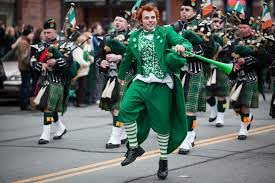
While the holiday originated in Ireland, the first St. Patrick’s day parade wasn’t held until 1766 in New York City by Irish immigrants. As the holiday evolved, it became less about religion and more about celebrating Irish culture.
What do the symbols mean?
One of the main symbols of St. Patrick’s Day is the shamrock. While this may seem absurd, it actually comes from the legend of St. Patrick using it to explain the holy trinity. Because St. Patrick’s Day was originally celebrated in remembrance of him, the legend lived on.
Another St. Patrick’s Day tradition is to wear the color green. St. Patrick himself was more so associated with the color blue, but green became a popular color during Ireland’s 1798 independence movement from Britain. Green was also said to make people invisible from leprechauns, who would pinch them if they weren’t wearing it. This change to green occurred as the focus of St. Patrick’s Day shifted from religion to culture, so be sure to wear green this St. Patrick’s Day!