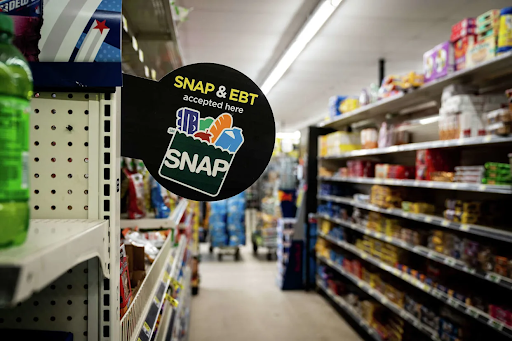
SNAP stands for the Supplement Nutrient Assistance Program, a government-funded program that was designed to assist low-income families and individuals by providing EBT cards to essentially support households that struggle with money management.
Recently, Trump’s administration has continued to enforce the cuts for SNAP benefits. Through a 2025 bill, Trump has been able to cut about $186 billion that would be going towards the government, and those cuts will follow through until 2034. As of February, 2026, recipients of the SNAP program are being held to new requirements regarding work hours.
The following conditions are provided by USA Today, and shortened by the West Press:
- 18 through 65 without dependents must work or attend a work program, such as SNAP Employment and Training, at least 80 hours per month to receive benefits. (The highest age used to be 55 years old)
- Requires parents and household members to meet the additional work requirements if a dependent child is age 14 or older (Before, anyone under 18 years of age, with a child, was exempt).
- Veterans, people 24 and younger who recently aged out of foster care, and unhoused people are no longer exempt from work requirements.
- restricted states’ ability to temporarily extend benefits beyond three months in areas where the number of jobs is insufficient.
Furthermore, by reducing the amount of money used to fund the SNAP program along with the implementation of the new work requirements, a lot of people will and are being affected in a negative way. In fact, the impact is said to reduce the number of recipients by over 2.4 million people. This causes other issues economically and physically. Physically, it’s not safe to regularly skip meals and cheap out on food. But due to those not being able to meet those requirements, they are left to fend for themselves, meaning they buy cheaper, less nutritious options for food, or they just don’t eat at all. This is especially dangerous when thinking about the children of the struggling parents. It’s not uncommon for these kids’ only meals to be when they are at school. Economically, there will be fewer demands for food banks. And with less participation in food banks comes less revenue being made from grocery stores. Likewise, local businesses will suffer, especially those in poorer parts of their city. When people don’t use SNAP benefits, because they are literally unable to, then they cannot purchase things. And if the main demographic for those who enter the local grocery stores relies on EBT, the shops become less likely to prosper.