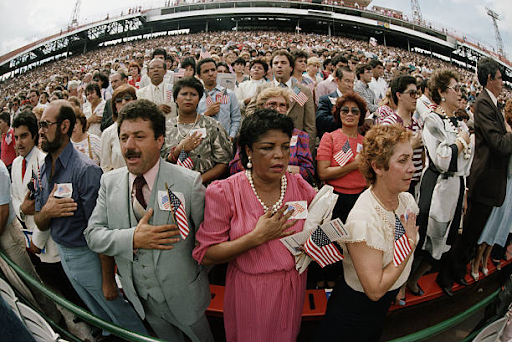
Every morning when American students arrive at school, they are greeted by the beginning of morning announcements, always starting with the Pledge of Allegiance. Some students stand, reciting it with their hand on their heart, others stand half-heartedly, while the rest remain seated and silent. The amazing thing about America is that we have the right to make our own choices, and standing up for the Pledge is optional.
History of the Pledge of Allegiance
The Pledge of Allegiance was created to celebrate the 400th anniversary of Christopher Columbus’s arrival in the Americas. It was written by Baptist Minister Francis Bellamy, with the original purpose serving as a public gimmick in order to promote patriotism. There have been several changes to the Pledge over the last decade, starting in 1923 when Congress changed “my flag” in the original first sentence to “the flag of the United States of America” so that it would specify which flag was being honored. However, the most notable change was in 1954 when Congress added the phrase “under God” due to the ongoing conflicts with the atheist Soviet Union during the Cold War. This phrase has been challenged and upheld multiple times, due to people believing that the phrase “under God” violated their 1st amendment rights as well as the Establishment Clause. Although many people have tried to protest this, Congress has kept this phrase, and it remains to this day.
Standing? Sitting? Respect? Disrespect?
Many people have different opinions on whether or not it is appropriate to stand for the Pledge of Allegiance. Some people believe that standing is meant to honor those who served our country in war, risking their lives to give America freedom. Others, however, believe the brave men and women who fought for our country fought for our right to choose whether or not we stand. They fought for us to be able to choose whether or not we want to stand for the Pledge of Allegiance. However, standing for the Pledge of Allegiance is meant to promote unity in our country, which has been an ongoing battle. It may be hard to stand for those who feel that the Pledge does not apply to them, as they do not feel as though they have been treated fairly in the United States.
Another Way to Honor Those Who Served
Many people stand for the Pledge to show their gratitude towards those who served our country. Is it performative, or do those who stand also do more? Nearly 32,882 of homeless Americans are Veterans who returned from war. If you stand for the Pledge of Allegiance to respect those who served, you could also pay your respects by donating to nonprofits that help homeless veterans, donate your time to the VA, or call the National Call Center for Homeless Veterans (877-424-3838). If you are interested in donating your money or even just your time advocating for homeless veterans, here are some links you can visit.
Veteran Affairs – https://www.va.gov/homeless/
National Coalition for Homeless Veterans –https://nchv.org/
Disabled American Veterans (DAV) – https://www.dav.org/get-help-now/veteran-topics-resources/homeless-veterans-assistance/