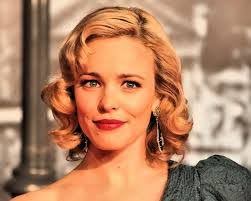

Star Wars is arguably one of the most told stories in fictional history. It is impossible not to have heard of it to at least some extent. It is a story about brotherhood. A story about hope. A story about love. And a story about the tragedy of loss. In the beginning, the story centers around a man who walks through a war carrying the title of “The Chosen One” – a common trope among such movies. This man is, to no surprise, Anakin Skywalker, and is later known by the name of Darth Vader. It should be safe to say that a spoiler disclaimer is unnecessary, as you have had 46 years to be exposed to this information. Anakin struggles with balancing the weight of his value and power against the restrictions that come with being a Jedi. One of those restrictions is his prohibition on attachments, which is arguable to him. This includes certain connections like romantic relationships. With no shock to his character, he has no regrets for crossing these lines. By episode two, Anakin has already shown a few merciless, very Darth Vader-like actions that were caused by his deeply rooted relationship with his mother. All that being said, naturally, in the end, he finds himself scoring a romantic relationship with Natalie Portman’s character- Padmé Amidala.
Padmé Amidala is first seen in the series, not as the senator she is known as in episodes two and three, but as Queen Amidala, the loyal leader of Naboo. She was elected by vote to be the ruler at the young age of fourteen. In episode one, Padmé saves Naboo from an invasion without a proper army, and forms alliances to fight against the Trade Federation while maintaining her major role as a pacifist. In episodes two and three, she is removed from her titles as queen due only to the re-election campaign that is required every two years by Naboo’s Monarchy system, according to Wookieepedia. Because her ruling was so rewarding and praised by the people of Naboo, after her demotion, she was sent to represent her home planet as a senator. There, she would use her political ideas and morals that were culturally valued in Naboo’s heritage. Even at war, Padmé would continue to use her voice to project the important ideals of peace through speeches to the Senate.
“If you offer the Separatists violence, they can only show violence in return. Many will lose their lives; all will lose their freedom.”
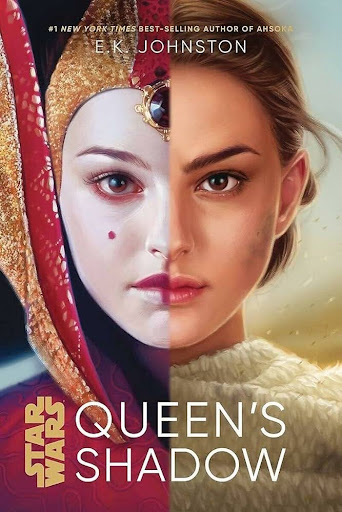
Padmé spent every day fighting for the rights and freedoms of others. In fact, much of her story is cut short in the movies, as it is not meant to be centered around her. Her impact was incredible both on and off screen. A published series of novels, written by E.K. Johnston, explores the issues Padmé’s character faced between episodes. Each book of the three books passes through a crisis that took place between the rolls of film that fans have come to know so well. The first book, Queen’s Shadow, takes place during the ten-year age gap between episodes one and two. It progresses through her demotion as Queen and her new role as Senator of Naboo, while representing the selfless acts she continues to serve for the people. The next book, Queen’s Hope, takes place directly after episode two and Queen’s Peril, going back to episode one, covering her election as Queen.
Through all the seasons of war and politics that made their mark over the galaxy, Padmé exceeded the strength and willpower through the part she played as a pacifist.
While Padmé is the mother of Star Wars— both literary and figuratively speaking– she can still be boxed away and cheaply cast as the role of “Anakin’s wife”. Padmé’s role as Anakin’s wife is a minor instrument in the choir of her life. Her character was first created back when the original trilogy was released with this exact purpose for her identity, but when captured on the screen, she came to life as her own person. It is so unfortunate that some people will only see her as a mother and wife.
Padmé is also very well known for her unique outfit designs among a large audience. This is something many people immediately associate with her before anything else. While her style is immaculately beautiful and peculiar, it is sad to see her once again dismissed to something so far from her more important characteristics.
At the end of Episode three, Revenge of the Sith, Padmé passes during the birth of the famous twins, Luke and Leia. Fans began to argue that her death was a weak plot that didn’t make sense. While the reason in a short sense is a little unsatisfying, it has much more depth than it might seem to some on the surface. Padmé’s character revolves around her faith and contributes to the Republic. She married a man with beliefs and fought beside him in the desperate times of war. She later became pregnant, and the couple planned the details of their future together; no matter where Padmé found herself in the back-and-forth of their relationship, her loyalties lay with the Republic. When Anakin fell to the dark side, her world turned upside down. Any plans for a future with him were lost, as was he. She had devoted so much to him, only to result in the betrayal of what was supposed to be a family. Without her future, everything she had given and spent time loving seemed hopeless. Not to mention the man she loved had hurt her while pregnant with his children. Her world had burned to the ground (literally). Within the span of hours, everything she had believed was gone. During birth, which was certainly something that might have been a difficult matter in such conditions, the medical droid had told Obi-Wan that Padmé, “had lost the will to live.” With the combination of childbirth, force choking, and the realization that her ideals, personal ideals, and future were lost at the hands of her husband, “death-by-heartbreak” feels like an understatement.
Anyone who should think Padmé is a small piece of the massive project that is Star Wars did not understand her purpose. Padmé is the very fabric of the Skywalker family. She is the blueprint of peace. She represents the women of the galaxy whose voices are quieter but speak volumes. An embodiment of feminism who makes all women feel seen. In a series where many men are in a position of higher power (or ground) and have abnormal abilities, it can often leave others to feel powerless. But in this society, Padmé takes her power to the stands with her ideas, voice, education, and peaceful notations. Proving that anyone with a strong point of view can be louder than someone who fights without words.